UK fire safety law places legal duties on a specific person or organisation known as the ‘responsible person’. If you own, manage or operate a building — or control the common parts of a block of flats — you may be the responsible person without realising it, and that comes with real legal responsibilities. This guide explains who the responsible person is, how the role differs from similar terms, what their duties include, and how fire doors fit into those responsibilities.
Key takeaways
- The ‘responsible person’ holds legal fire safety duties under the Fire Safety Order 2005.
- It’s usually the employer, building owner, landlord or managing agent.
- Duties include the fire risk assessment, fire precautions, information and maintenance.
- A building can have more than one responsible person, who must cooperate.
- Keeping fire doors inspected and maintained is a core part of the role.
What is the ‘responsible person’?
Under the Regulatory Reform (Fire Safety) Order 2005 — usually called the Fire Safety Order — the ‘responsible person’ is whoever has control of a non-domestic premises, or of the common parts of a multi-occupied residential building. In a workplace this is normally the employer. Elsewhere it may be the owner, landlord, managing agent or anyone else who has control of the premises. The responsible person is legally accountable for fire safety in that building.
Who is the responsible person in different situations?
It isn’t always obvious who holds the duty. In practice it usually falls to:
- Workplaces and offices — usually the employer.
- Rented homes and HMOs — typically the landlord or managing agent, especially for the common parts (see our guide to fire doors in HMOs).
- Blocks of flats — the person or organisation responsible for the common parts, often the freeholder or managing agent.
- Shops, hotels and public buildings — the owner or operator in control of the premises.
- Construction sites — often the principal contractor.
Can there be more than one responsible person?
Yes. Many buildings have several responsible persons — for example, a managing agent for the common parts and individual employers within commercial units. Where more than one responsible person exists, the law requires them to cooperate and coordinate so that fire safety is managed consistently across the whole building.
Responsible person, duty holder, competent person and accountable person
These terms are often confused, so it helps to be clear:
- Responsible person — the legal duty holder under the Fire Safety Order (the focus of this guide).
- Duty holder — a general term often used interchangeably with responsible person.
- Competent person — someone with the training, experience and knowledge to help the responsible person meet their duties, such as a fire risk assessor or fire door surveyor.
- Accountable person — a separate role introduced by the Building Safety Act 2022 for higher-risk residential buildings (generally 18 metres or more, or at least seven storeys).
The responsible person can appoint competent people to carry out tasks, but the legal responsibility remains with them.
What are the responsible person’s duties?
The main duties under the Fire Safety Order include:
- Carry out and regularly review a fire risk assessment, and record the significant findings
- Put in place and maintain appropriate fire precautions
- Provide fire safety information, instruction and training to staff or residents
- Keep escape routes, fire doors and fire safety equipment in effective working order
- Appoint competent people to assist where needed
- Keep records of the fire safety arrangements
Our guide to fire door regulations in the UK sets out the wider framework these duties sit within.
How do fire doors fit into the responsible person’s duties?
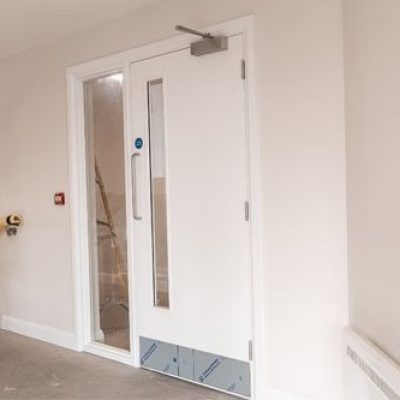
Fire doors are one of the most important fire precautions, so keeping them effective falls squarely to the responsible person. In practice that means making sure fire doors are correctly installed, regularly surveyed and promptly maintained. Our fire door inspection checklist helps with routine checks, and keeping records of those checks demonstrates the duties are being met.
Responsible person duties in multi-occupied residential buildings
The rules are more detailed for blocks of flats and other multi-occupied residential buildings. The Fire Safety Act 2021 confirmed that the Fire Safety Order covers the structure, external walls and flat entrance doors, and the Fire Safety (England) Regulations 2022 added specific duties — for example, in buildings over 11 metres, quarterly checks of fire doors in the common parts and annual checks of flat entrance doors, plus providing residents with fire door safety information. See our guide to fire doors in HMOs and multi-occupancy buildings.
What happens if the responsible person doesn’t comply?
Fire safety duties are enforced by the local fire and rescue authority, which can issue informal advice, enforcement notices or prohibition notices. Serious breaches can lead to prosecution and significant fines, and in the most serious cases, imprisonment. Beyond the legal consequences, failing to maintain fire doors and other precautions puts people at risk — which is the reason the duties exist in the first place.
How to meet your duties
In practice, meeting your duties means keeping an up-to-date fire risk assessment, acting on its findings, and keeping fire doors specified, installed, inspected and maintained. Appoint competent people where you need support, and keep clear records of everything. Professional surveys and ongoing maintenance make the fire door side of this straightforward.
How EYJ supports responsible persons
EYJ helps responsible persons keep their fire doors compliant with surveys, maintenance, supply and installation across Yorkshire and the UK. To discuss your building, get in touch.
Frequently asked questions
Who is the responsible person for fire safety?
Whoever controls the premises — usually the employer, owner, landlord or managing agent. For the common parts of a block of flats, it’s whoever controls those areas.
Can there be more than one responsible person?
Yes. In many buildings several parties share duties and must cooperate with one another to manage fire safety consistently.
Is the responsible person legally liable?
Yes — they hold legal duties under the Fire Safety Order and can be held accountable, including through enforcement notices, fines or prosecution, for failing to meet them.
What’s the difference between a responsible person and an accountable person?
The responsible person is the duty holder under the Fire Safety Order. The accountable person is a separate role under the Building Safety Act 2022 for higher-risk residential buildings.
Are fire doors the responsible person’s responsibility?
Yes. Keeping fire doors specified, installed, inspected and maintained is part of the responsible person’s duties.
Can I appoint someone to manage fire safety for me?
Yes. You can appoint competent people to help, but the legal responsibility remains with you as the responsible person.
Speak to EYJ about your fire doors
If you’re a responsible person and want to be confident your fire doors are compliant, get in touch to arrange a survey or discuss ongoing maintenance.