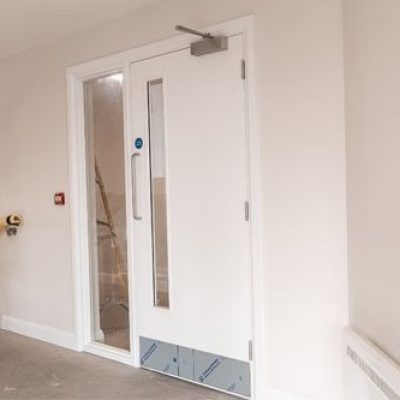
Why Fire Doors Are Critical To Building Safety
When a fire occurs in a commercial building, every second matters. The ability for occupants to evacuate safely often depends on the building’s fire safety measures working exactly as intended. One of the most important elements of any fire safety strategy is the fire door.
Fire doors form part of a building’s passive fire protection system and are designed to help slow the spread of fire and smoke. By protecting escape routes and creating safe compartments within a building, fire doors play a vital role in supporting evacuation plans and helping occupants reach safety.
Whether in offices, schools, healthcare facilities, hotels or industrial premises, properly installed and maintained fire doors are an essential part of commercial building safety.
What Is A Fire Door?
A fire door is a specially designed door assembly that has been tested to resist fire and smoke for a specified period of time. Unlike a standard door, a fire door is manufactured using fire-resistant materials and is installed alongside compatible components such as frames, seals, hinges and door closers.
Fire doors are designed to work as a complete system, helping to maintain compartmentation and limit the spread of fire throughout a building.
Common fire door ratings include:
- FD30 – approximately 30 minutes of fire resistance.
- FD30S – approximately 30 minutes of fire resistance with smoke control seals.
- FD60 – approximately 60 minutes of fire resistance.
- FD60S – approximately 60 minutes of fire resistance with smoke control seals.
The required rating will depend on the building type and fire strategy.
How Fire Doors Support Evacuation Plans
A well-designed evacuation plan relies on people being able to move safely from occupied areas to designated exits. Fire doors help make this possible by slowing the movement of fire and smoke.
This provides several important benefits:
- More time for occupants to evacuate
- Better protection of escape routes
- Reduced smoke spread when smoke-rated (FD30S/FD60S) doors are specified
- Improved visibility during evacuation
- Safer access for emergency services
Without effective fire doors, corridors, stairwells and exits could quickly become compromised, making evacuation significantly more difficult.
Protecting Escape Routes
One of the primary roles of a fire door is to protect escape routes.
Escape routes are the designated pathways occupants use to leave a building during an emergency. These routes must remain as clear and safe as possible to allow a quick evacuation.
Fire doors are commonly installed along:
- Corridors
- Stairwells
- Lobbies
- Protected routes
- Plant rooms
- Service areas
By containing fire within a specific area, fire doors help prevent escape routes from becoming unusable too quickly.
Fire Doors And Compartmentation
Compartmentation is a key principle of passive fire protection. It involves dividing a building into separate fire-resistant sections to limit the spread of fire and smoke.
Fire doors form an important part of this strategy.
When closed, a fire door helps maintain the integrity of a fire compartment, reducing the likelihood of fire spreading into adjacent areas.
The benefits of effective compartmentation include:
- Improved occupant safety
- Reduced property damage
- More time for evacuation
- Better protection of critical building areas
- Improved emergency response conditions
Without properly functioning fire doors, compartmentation can be compromised.
The Importance Of Smoke Control
While flames are often seen as the primary danger during a fire, smoke can present an equally serious risk.
Smoke can spread rapidly throughout a building, reducing visibility and making evacuation more difficult.
Smoke control is provided by fire doors fitted with smoke seals, commonly referred to as FD30S or FD60S doors. The “S” classification indicates that the doorset has been designed to help restrict the movement of smoke as well as fire when installed correctly. This can help:
- Improve visibility
- Reduce exposure to harmful smoke
- Support safer evacuation
- Protect escape routes
Effective smoke control is a major reason why fire doors are included within commercial building fire strategies.
Common Fire Door Problems
Fire doors can only perform correctly if they are properly maintained.
Some of the most common issues found during inspections include damaged seals, incorrect door gaps, faulty door closers, damaged frames, missing hardware and general wear and tear. In some cases, fire doors may have been altered or repaired incorrectly, affecting their ability to perform during a fire.
Regular inspections can help identify these issues before they become a safety concern.
Why Fire Door Inspections Matter
Fire doors are often used hundreds of times each day in busy commercial buildings. Over time, this can lead to wear, damage and reduced performance.
Routine inspections help ensure that fire doors remain compliant and capable of performing as intended.
Inspections typically assess:
- Door condition
- Frame condition
- Intumescent seals
- Door closers
- Hinges and hardware
- Glazing systems
- Gaps and clearances
Any defects identified should be addressed promptly to maintain building safety.
Fire Doors As Part Of A Wider Fire Safety Strategy
Although fire doors are incredibly important, they are only one part of a complete fire safety strategy.
Commercial buildings often rely on a combination of measures, including:
- Fire doors
- Fire stopping systems
- Fire compartmentation
- Fire alarms
- Emergency lighting
- Evacuation procedures
- Fire risk assessments
When these systems work together, they help create a safer environment for occupants and visitors.
Choosing Quality Fire Door Systems
When selecting fire doors for a commercial building, it is important to consider:
- Fire certification
- Product testing
- Installation standards
- Maintenance requirements
- Third-party accreditation
Choosing certified products and experienced installers helps ensure fire doors perform correctly throughout their service life.
Final Thoughts
Fire doors play a crucial role in commercial building evacuation plans. By slowing the spread of fire and smoke, protecting escape routes and supporting compartmentation, they help provide occupants with valuable time to evacuate safely.
However, fire doors can only deliver these benefits when they are correctly specified, installed and maintained. Regular inspections and ongoing maintenance are essential for ensuring they continue to perform as intended and remain compliant with fire safety requirements.
Frequently Asked Questions
Why are fire doors important in commercial buildings?
Fire doors help slow the spread of fire and smoke, protect escape routes and provide occupants with more time to evacuate safely during an emergency.
How do fire doors support evacuation plans?
Fire doors help maintain safe escape routes by containing fire. Where smoke-rated doors (such as FD30S or FD60S) are specified, they also help restrict the spread of smoke, supporting safer evacuation.
Where are fire doors usually installed?
Fire doors are commonly installed in corridors, stairwells, plant rooms, service areas and other locations that form part of a building’s fire strategy.
How often should commercial fire doors be inspected?
Inspection frequency will depend on the building type and usage, but regular inspections are recommended to identify defects and maintain compliance.
Can a damaged fire door still provide protection?
A damaged fire door may not perform as intended during a fire. Any defects should be inspected and repaired as soon as possible to maintain safety and compliance.