In a commercial fit-out, joinery rarely goes in all at once. It’s installed in two distinct stages – first fix and second fix – and knowing the difference matters for anyone planning a programme, coordinating trades or specifying a joinery package. This guide explains what each stage covers, where joinery sits in the wider fit-out sequence, and why the way joinery is manufactured can make a real difference to how smoothly a project runs.
Key takeaways
- First fix joinery is the structural, behind-the-scenes carpentry fitted before plastering.
- Second fix joinery is the visible, finishing work installed once the space is near completion.
- Doorsets, panelling, counters and cabinetry mostly fall under second fix.
- Factory-manufactured joinery arrives installation-ready, helping keep the programme on track.
What is first fix joinery?
First fix joinery covers the structural and preparatory carpentry carried out before walls are plastered and finishes applied. It’s the work that sits behind the scenes – door linings and frames, timber studwork and grounds, and the fixings that later components will attach to. Because it happens early in the build, first fix is all about accuracy: getting the framework right so that everything fitted afterwards lines up correctly.
What is second fix joinery?
Second fix joinery is the finishing work installed once first fix is complete and the space has been plastered and decorated to a stage where finished components won’t be damaged. This is the visible, high-quality joinery that defines how a commercial space looks and functions. It demands precision and a fine finish, because any imperfection is on show. Typical second fix joinery includes:
- Doorsets, doors and ironmongery
- Skirting, architraves and trims
- Reception desks, counters and bars
- Wall panelling and feature joinery
- Bespoke cabinetry and built-in furniture
First fix vs second fix: the key difference
The simplest way to think about it: first fix is everything fitted before plastering that you won’t see in the finished space, while second fix is everything fitted afterwards that you will. First fix is about structure and preparation; second fix is about finish and function. Both need to be right – poor first fix work makes a clean second fix installation far harder to achieve.
Where joinery sits in a commercial fit-out programme
On a commercial fit-out, joinery is closely tied to the sequencing of other trades. First fix joinery is coordinated alongside first fix mechanical and electrical work, before plastering. Second fix joinery follows once the space is decorated and other second fix trades are underway, near the end of the programme. Because second fix joinery is one of the last things to go in, delays or errors at this stage are highly visible and can hold up completion – which is why getting the components right, and on time, is so important.
Why factory-manufactured joinery matters on a fit-out
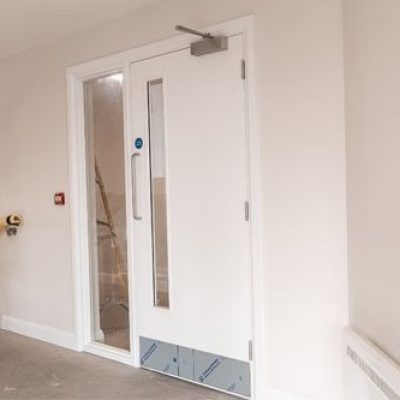
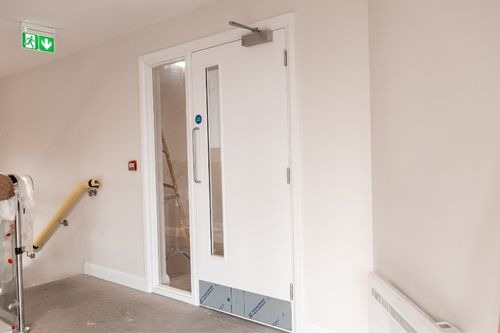
The way joinery is produced has a direct effect on how the second fix stage runs. Joinery manufactured off-site in a controlled factory environment – as complete units, made to approved drawings – arrives installation-ready, with far less cutting, fitting and adjustment needed on site. That means faster, more predictable installation and a more consistent finish, which is particularly valuable on larger schemes or projects with repeating layouts. It’s the same principle behind our internal timber doorsets and fire-rated doorsets: precise, consistent units that simply fit. Where doors need fitting on site, our fire door installation team can complete the work to the required standard.
Frequently asked questions
What’s the difference between first fix and second fix joinery?
First fix joinery is the structural carpentry fitted before plastering, such as linings, frames and grounds. Second fix is the visible finishing joinery installed afterwards, including doors, skirting, panelling and counters.
Is a doorset first fix or second fix?
The frame or lining is typically fitted at first fix, while the finished door, ironmongery and seals are completed at second fix. A pre-hung doorset can streamline this by arriving as a complete unit.
Why use a joinery manufacturer rather than making joinery on site?
Factory manufacture gives consistent quality, accurate dimensions and installation-ready units, reducing on-site time and waste – especially on larger commercial projects.
Talk to EYJ about your commercial joinery
EYJ manufactures bespoke commercial joinery and doorsets in our own East Yorkshire factory, supplied installation-ready to contractors across the UK. For more on how joinery packages are priced, see our guide to how bespoke joinery is specified and costed. To discuss a project or package, get in touch with our team.