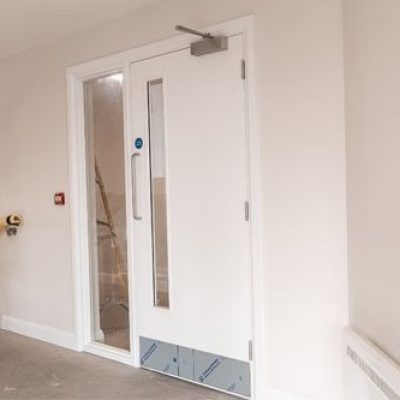
The Importance Of Accredited Fire Door Installation
Fire doors are only effective when they are installed correctly. Even a fully certified fire door can fail to perform properly if installation standards are poor.
This is why many contractors, building owners and responsible persons choose fire door installers with 3rd party accreditation schemes such as BM Trada Q Mark.
Using accredited installers helps ensure fire doors are fitted correctly, safely and in line with recognised industry standards.
Why Proper Installation Matters
A fire door is designed to slow the spread of fire and smoke for a specific period of time. To achieve this, every component must be installed correctly.
This includes:
- Door leaf
- Frame
- Intumescent seals
- Hinges and ironmongery
- Closers
- Glazing systems
- Gaps and clearances
If any part of the installation is incorrect, the fire door may not perform as intended during a fire.
What Is A BM Trada Q Mark Accreditation?
BM Trada Q Mark is a recognised certification body that assesses companies against strict installation and compliance standards.
Fire door installers working under BM Trada Q Mark schemes are regularly assessed to confirm they:
- Follow correct installation methods
- Use compliant products
- Maintain quality standards
- Keep accurate records
- Demonstrate technical competence
This provides greater reassurance for clients and building owners.
The Benefits Of Using Accredited Fire Door Installers
Improved Compliance
Building regulations and fire safety legislation place clear responsibilities on building owners and contractors.
Using BM Trada Q Mark accredited installers helps demonstrate that fire doors have been installed using recognised standards and best practices.
Better Quality Control
Accredited installers work to consistent installation procedures. This helps reduce errors and improves the overall quality of the finished installation.
Regular assessments also help maintain high standards across every project.
Reduced Risk Of Failure
Incorrectly installed fire doors can fail during an emergency.
Common installation problems include:
- Incorrect gaps around the frame
- Missing seals
- Incorrect hardware
- Poorly fitted closers
- Damaged door components
Using experienced accredited installers helps reduce these risks.
Why Accreditation Matters In Commercial Buildings
Commercial and public sector buildings often have stricter fire safety requirements.
Accredited fire door installation is commonly required for:
- Schools
- Hospitals
- Offices
- Residential developments
- Hotels
- Government buildings
Working with accredited installers provides confidence that fire safety standards are being properly followed.
Ongoing Inspections And Maintenance
Fire doors should not only be installed correctly, but also inspected and maintained throughout their lifespan.
Accredited installers can often provide:
- Installation records
- Maintenance guidance
- Fire door surveys
- Ongoing support
- Remedial recommendations
This helps buildings remain compliant over time.
Choosing The Right Fire Door Installer
Before appointing a fire door installer, it is important to check:
- Accreditation status
- Experience within the sector
- Certification details
- Previous project work
- Knowledge of fire safety regulations
Working with qualified specialists helps protect both the building and its occupants.
Final Thoughts
Fire doors are an essential part of passive fire protection, but correct installation is just as important as the product itself.
Using 3rd party accredited installers such as BM Trada Q Mark-approved contractors helps improve compliance, safety and long-term reliability. It also provides reassurance that fire doors have been fitted to recognised industry standards.